
The proposed development
The proposed development included photovoltaic solar arrays, a battery energy storage system, access roads, electrical infrastructure and ancillary facilities. The subject property covered approximately 1,700 acres in the Chico area. NGS’s assignment was to identify subsurface constraints that could affect project feasibility, foundation selection, excavation and construction cost.
Our work combined field reconnaissance, limited subsurface exploration, laboratory testing and geologic review. The resulting feasibility-level study provided planning considerations for the proposed development before a later, more detailed design investigation.
Adapting the exploration when rock was encountered
The initial plan called for a conventional hollow-stem auger. When hard rock was encountered, NGS coordinated a coring rig that same day so the investigation could continue through the rock. The field program ultimately included one hollow-stem boring, four rock-core borings and five test pits.
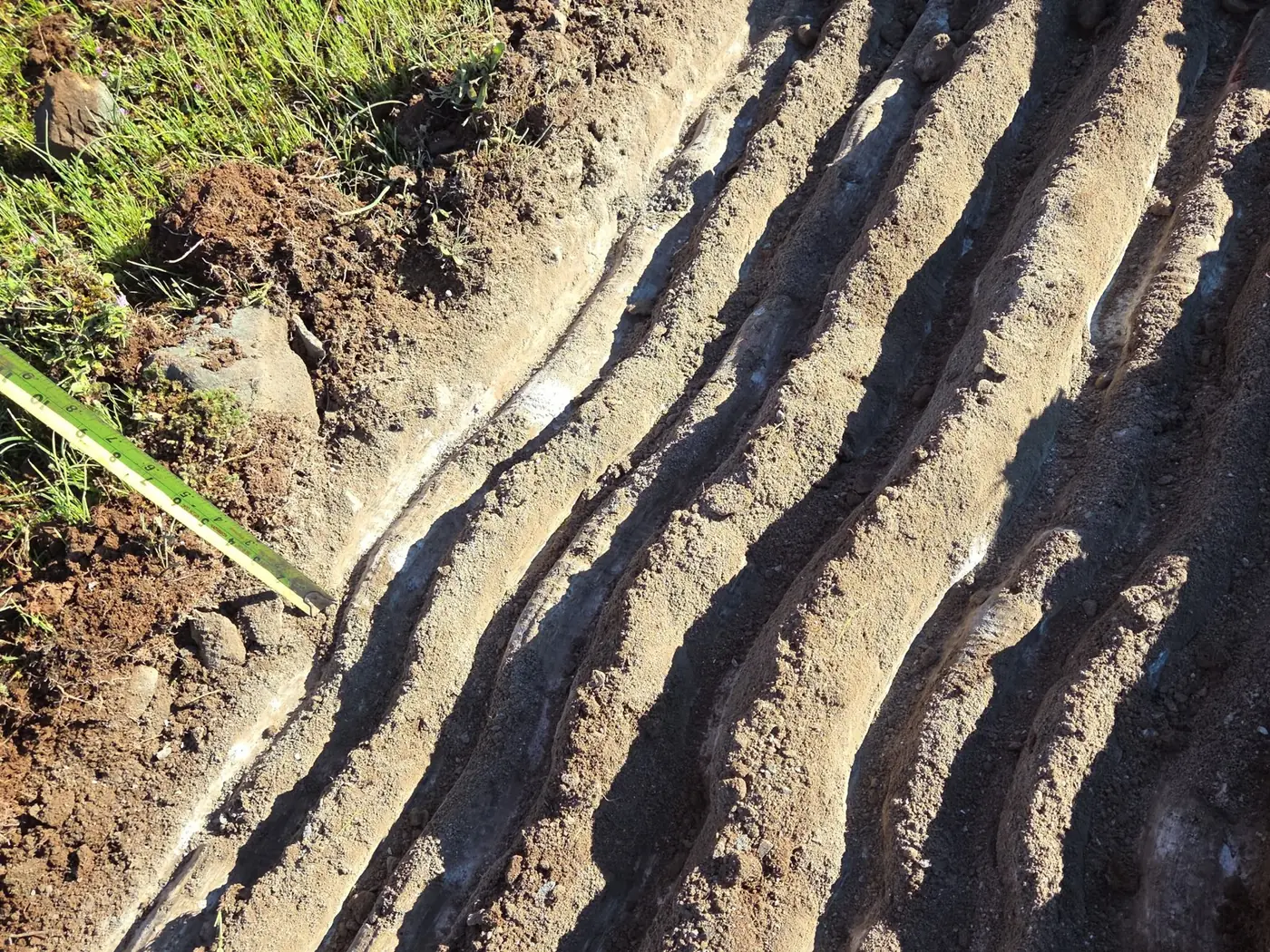
The borings and cores extended to a maximum depth of 15 feet below the existing ground surface. Test pits encountered practical refusal at shallow depth. Field logging and recovered rock cores provided information about the materials that ordinary soil sampling could not adequately characterize.
Connecting rock conditions to foundation planning
Laboratory work included soil classification and engineering-property testing, together with unconfined compressive-strength testing of representative rock cores. The findings indicated variable rock strength and the potential for shallow bedrock to affect driven foundations and excavation.
NGS evaluated the feasibility implications of pile-driving refusal, drilled and grouted systems, ballasted foundations and support for ancillary structures. The study also addressed the possibility that trenching and rock excavation would require specialized equipment. These considerations helped define the questions that the subsequent design-level investigation would need to resolve.
A clear scope for the next stage
The completed assignment was a feasibility-level geotechnical investigation. Final foundation design parameters, additional exploration and any pile-testing program were identified as later work. Construction observation and testing were also separate future phases.
For large energy developments, this distinction matters: the early investigation identifies constraints and informs planning, while the design investigation develops recommendations around the selected layout and foundation systems.
Engineering by Noorzay Geotechnical Services, Inc. Meet Maihan Noorzay, M.S., P.E., G.E.