Define the proposed system area
We review the property location, proposed development, available site plan and the anticipated disposal area. The system type and planned depth help guide test locations and the field program.
 Noorzay Geotechnical Services, Inc.
RIVERSIDE BASED · SERVING SOUTHERN CALIFORNIA
Field testing and reports to support septic system planning. NGS investigates the proposed disposal area and documents soil conditions and percolation results for the project team.
Discuss your projectTESTING FOR ONSITE WASTEWATER PLANNING
A septic percolation investigation evaluates soil conditions and water movement in the proposed disposal area. NGS provides field testing and reporting to support onsite wastewater planning for residential and other proposed developments.
We review the property location, proposed development, available site plan and the anticipated disposal area. The system type and planned depth help guide test locations and the field program.
Exploratory borings and test holes document the materials encountered beneath the proposed area. Soil layering, caving, rock or refusal and groundwater observations are recorded where encountered.
Test-hole preparation, presoak and water-level measurements are planned for the applicable test procedure. Access, water supply and field coordination are discussed before mobilization.
The report documents the investigation, subsurface observations and percolation results, with supporting logs and data appropriate to the agreed scope. The information supports the project’s septic evaluation and subsequent review.
FROM TEST RESULTS TO A PROPOSED SYSTEM
The proposed development and the location of its wastewater disposal area matter. A test result describes the area and conditions tested; it should be used together with the site information and the applicable review process.
Percolation testing provides information for the septic evaluation. Complete system design, construction and approval are separate steps unless specifically included in the proposal. Identify the project’s system designer and reviewing agency when available.
Moving the disposal area or changing its depth may change the soils involved. Share revisions before relying on earlier testing so we can determine whether the available investigation still addresses the proposed layout.
Shallow rock, variable soils, groundwater or excavation limitations can affect the investigation and the options considered by the design team. The field findings guide the next step; the scope should allow the team to discuss conditions that differ from expectations.
Joshua Tree, California · RELATED PROJECT EXPERIENCE
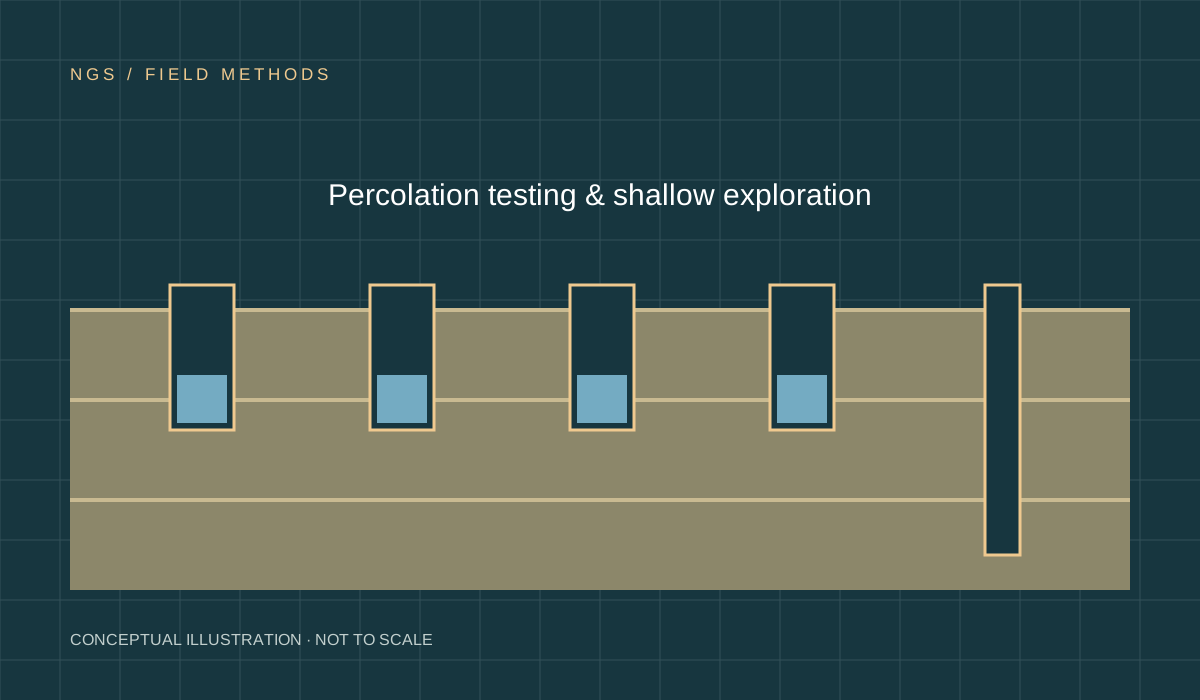
NGS investigated a proposed single-family residence site using leach-line percolation testing and shallow exploration. The documented program recorded water-level changes and subsurface conditions to support septic planning in desert soils.
Explore the projectBEFORE WE PREPARE A PROPOSAL
Email is strongly recommended because Maihan is often in the field. The following information helps us develop an appropriate scope. Preliminary plans are useful; tell us which details are still being decided.
Send the address or assessor’s parcel number, a site plan and a description of the proposed residence, ADU or other use. Identify any existing septic system and proposed changes.
Include the proposed disposal area, system information from your designer and any agency comments or prior percolation reports. Tell us which details have been established and which are still under consideration.
Describe access to the proposed test area, available water, existing improvements and any scheduling constraints. We will discuss exploration and testing arrangements with you.
PLANNING YOUR PROJECT
They serve different design purposes and can have different procedures and reporting needs. Tell us whether you are planning onsite wastewater disposal, stormwater facilities or both so the appropriate work can be scoped.
The report provides investigation findings for the design and review process. System approval is determined through the applicable agency review; testing by itself does not authorize construction.
Where the project needs both services, we can coordinate them in a combined proposal. The building investigation and septic testing still need to address their respective locations, depths and engineering questions.
The reviewing agency and proposed system affect the required investigation and documentation. We review that context when developing the scope. Riverside County and San Bernardino County publish resources that can help you begin the discussion.
AGENCY RESOURCES
These official resources provide background for project planning. Send us the comments or instructions that apply to your property so the proposed testing can be coordinated with the project.
RELATED SERVICES
NGS can evaluate the building site and coordinate other field services where needed.
FROM OUR PROJECT EXPERIENCE
Explore a Hesperia residential assignment with a shared geotechnical investigation and separate septic percolation reports.